
Hippopotamus
Hippos wade through Lake Tanganyika's shallows and nearby rivers, making them one of the most recognizable large animals in Burundi's wetlands.
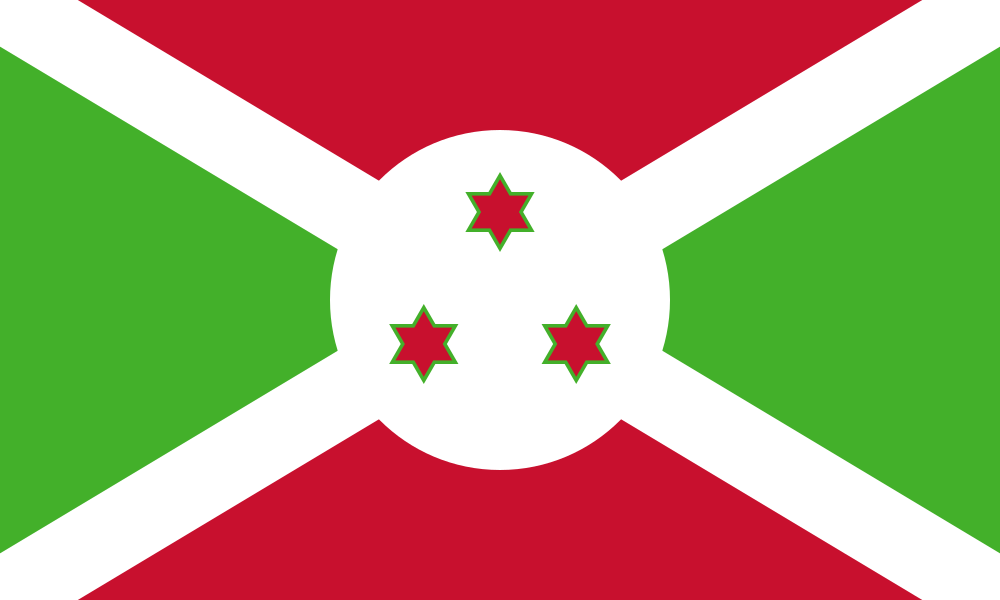
Flag of Burundi
Field Report
Burundi is a small, hilly country tucked into the heart of Africa, sitting just below the equator and bordered by the enormous freshwater Lake Tanganyika on one side and the countries of Rwanda, Tanzania, and the Democratic Republic of Congo on the others. Even though it is one of Africa's smallest nations, it is packed with people, rolling green hills, and a rich culture built around farming, community, and music. Most people there have heard the name of Jesus, but many are still waiting for someone to sit with them and explain who He truly is.
From the Field Notebook
Hippopotamus
Hippos wade through Lake Tanganyika's shallows and nearby rivers, making them one of the most recognizable large animals in Burundi's wetlands.
African Fish Eagle
This striking bird hunts over Lake Tanganyika with a piercing cry that travelers say they never forget once they have heard it.
Olive Baboon
Troops of olive baboons roam Burundi's highland forests and savannas, living in tight family groups that can number in the dozens.
Ugali
A thick, firm porridge made from maize or cassava flour, ugali is shaped into a ball and used like a scoop to eat stews and vegetables at nearly every meal.
Isombe
Cassava leaves are pounded and slow-cooked with palm oil and sometimes peanuts to make this earthy, savory dish that is a staple across the country.
Ikivuguto
This naturally fermented milk has a tangy, yogurt-like flavor and is a beloved everyday drink that Burundians have made for generations.
Burundi is one of the smallest countries in all of Africa, yet it is home to more than 13 million people, making it one of the most densely populated nations on the continent.
Lake Tanganyika, which borders Burundi to the west, is the second deepest lake in the world — so deep that if you dropped the Eiffel Tower in, it would still be more than a mile underwater.
Burundi's drummers are world-famous: the Royal Drummers of Burundi have performed for audiences across the globe, and their tradition of drumming is recognized by UNESCO as part of humanity's cultural heritage.
Burundi and neighboring Rwanda share the same language, Kirundi and Kinyarwanda, which are so close that many speakers can understand each other easily.
Burundi moved its official capital from Bujumbura to the inland city of Gitega in 2019, though Bujumbura — sitting right along Lake Tanganyika — remains the country's largest city and economic center.
Daily Life
64
Years life expectancy
71%
Can read and write
93%
Kids go to school
Missions Field Report
Burundi is home to 6 distinct people groups — 1 of them haven’t yet heard about Jesus.
Most Burundi's people follow Christianity (93.1%). Evangelical Christians make up about 30.5% of the population.
What People Believe
Unreached People Groups
These are communities of people who haven’t had the chance to hear about Jesus yet. They need missionaries — and they need kids like you to pray for them.
Swahili
16,000 people
Prayer Journal
Tick each one as you pray. God hears every word.