
Djibouti Francolin
This small, speckled bird is found nowhere else on Earth except the juniper forests on Djibouti's Goda Mountains, making it one of the rarest birds in all of Africa.
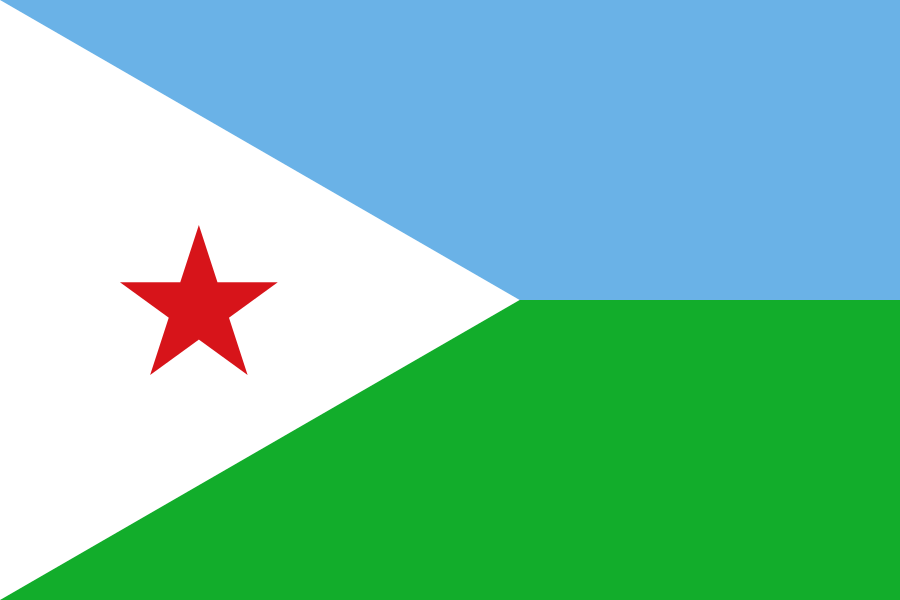
Flag of Djibouti
Field Report
Djibouti is a tiny country on the Horn of Africa, tucked between Ethiopia, Eritrea, and Somalia, right where the Red Sea meets the Gulf of Aden — one of the busiest shipping lanes in the world. Its landscape is dramatic and stark, full of volcanic rock, salt lakes, and desert heat, and most of its people are Somali or Afar and follow Islam. Very few people in Djibouti have ever had a chance to hear about Jesus, which means your prayers for this small nation genuinely matter.
From the Field Notebook
Djibouti Francolin
This small, speckled bird is found nowhere else on Earth except the juniper forests on Djibouti's Goda Mountains, making it one of the rarest birds in all of Africa.
Whale Shark
The warm waters of the Gulf of Tadjoura draw whale sharks — the largest fish in the world — to feed near Djibouti's coast each winter, and divers come from many countries just to swim beside them.
Hamadryas Baboon
Troops of hamadryas baboons roam Djibouti's rocky hillsides and were considered sacred by ancient Egyptians, though today they are simply a striking part of the landscape locals know well.
Skoudehkaris
This spiced rice dish cooked with goat or lamb and fragrant with cumin and cinnamon is considered Djibouti's national dish and appears at family gatherings and celebrations.
Lahoh
A spongy, slightly sour flatbread with a lacy pattern of holes on top, lahoh is eaten for breakfast or alongside stew and has roots shared across the Horn of Africa and Yemen.
Maraq
This thin, savory broth made with goat meat and aromatic spices is a daily staple in many Djiboutian homes and is often the first course of a family meal.
Djibouti is one of the smallest countries in Africa — slightly smaller than the state of New Hampshire — yet it hosts military bases from at least five different countries, including the only permanent United States military base on the African continent.
Lake Assal in Djibouti sits 509 feet below sea level, making it the lowest point in Africa and one of the saltiest bodies of water on the planet, saltier even than the Dead Sea.
Djibouti City is home to roughly two-thirds of the entire country's population, meaning most of the land outside the capital is very sparsely inhabited desert and volcanic rock.
Djibouti has almost no rivers and receives very little rain each year, so the country must import nearly all of its fresh water and food, relying heavily on its busy port and shipping trade to survive.
The Afar people of Djibouti live in one of the hottest inhabited places on Earth — the Danakil region nearby regularly records ground temperatures above 160 degrees Fahrenheit in the summer sun.
Daily Life
66
Years life expectancy
66%
Kids go to school
Missions Field Report
Djibouti is home to 7 distinct people groups — 5 of them haven’t yet heard about Jesus.
Nearly all Djibouti's people follow Islam (96.2%). Less than 1% of people in Djibouti are Evangelical Christians.
What People Believe
Unreached People Groups
These are communities of people who haven’t had the chance to hear about Jesus yet. They need missionaries — and they need kids like you to pray for them.
Somali, Issa
666,000 people
Afar
378,000 people
Arab, Yemeni
41,000 people
Arab, Omani
27,000 people
Deaf
5,000 people
Prayer Journal
Tick each one as you pray. God hears every word.