
Western Chimpanzee
Guinea is home to one of the largest remaining populations of western chimpanzees in West Africa, and local researchers have observed them using stone tools to crack open nuts — a behavior passed down through generations.
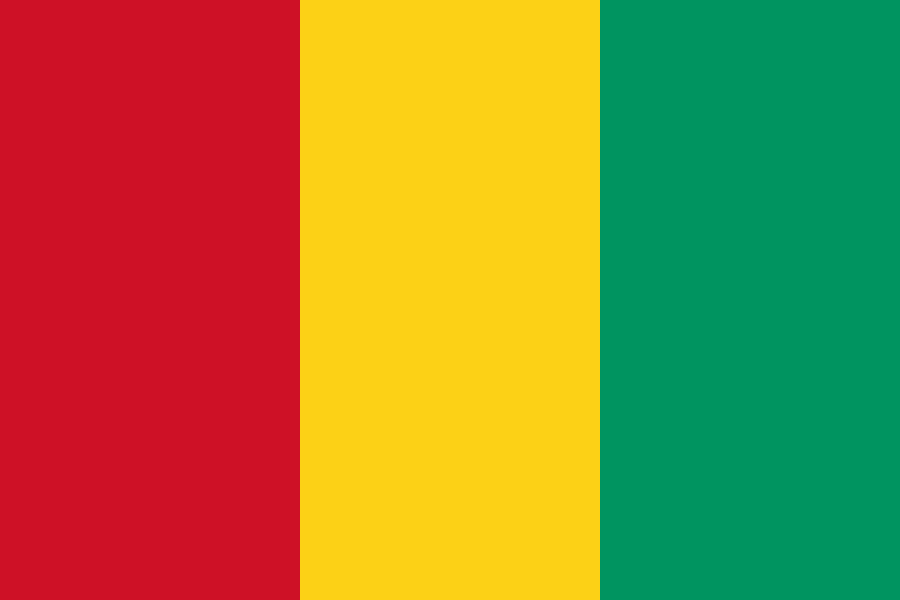
Flag of Guinea
Field Report
Guinea is a country on the Atlantic coast of West Africa, tucked between Sierra Leone, Liberia, Senegal, and a few other neighbors, with a capital city called Conakry that sits on a small peninsula jutting out into the ocean. Its landscape shifts from a hot, busy coastline through grassy plains and up into misty highlands where rivers begin their long journeys to the sea. More than 13 million people call Guinea home, and the vast majority have had little or no opportunity to hear the good news about Jesus.
From the Field Notebook
Western Chimpanzee
Guinea is home to one of the largest remaining populations of western chimpanzees in West Africa, and local researchers have observed them using stone tools to crack open nuts — a behavior passed down through generations.
Nile Crocodile
Nile crocodiles live in Guinea's rivers and can hold their breath underwater for up to two hours while waiting patiently for prey to approach the bank.
African Forest Elephant
Smaller and shaggier than savanna elephants, African forest elephants quietly roam Guinea's dense highland forests, leaving wide trails that other animals also use as paths.
Fou Fou
Fou fou is a thick, doughy staple made from pounded cassava or plantain that is torn into small pieces and dipped into savory soups or stews at nearly every meal.
Mafé
Mafé is a rich, earthy peanut stew slow-cooked with meat and vegetables that fills the whole kitchen with a warm, nutty aroma as it simmers.
Thiakry
Thiakry is a sweet dessert made from fermented millet couscous mixed with creamy yogurt and a little sugar, often enjoyed at celebrations and family gatherings.
Guinea contains the headwaters of three of West Africa's most important rivers — the Niger, the Senegal, and the Gambia — which is why it is sometimes called 'the water tower of West Africa.'
Guinea holds roughly one-third of the world's known bauxite reserves, the ore used to make aluminum, meaning a huge share of the metal in everyday objects like cans and airplanes starts as rock dug from Guinean soil.
The Fouta Djallon highlands in central Guinea rise to nearly 5,000 feet and are cool enough that people who live there sometimes see mist rolling through the valleys every single morning.
Guinea has more than 40 different ethnic groups, each with its own language and traditions, so a child growing up near Conakry might hear three or four completely different languages just walking through a busy market.
The kora, a 21-stringed instrument that looks like a large gourd with a long neck, was developed by the Mandinka people of the region and produces music that sounds almost like a harp blended with a guitar.
Daily Life
61
Years life expectancy
40%
Can read and write
76%
Kids go to school
Missions Field Report
Guinea is home to 42 distinct people groups — 28 of them haven’t yet heard about Jesus.
Most Guinea's people follow Islam (88.0%). Less than 1% of people in Guinea are Evangelical Christians.
What People Believe
Unreached People Groups
These are communities of people who haven’t had the chance to hear about Jesus yet. They need missionaries — and they need kids like you to pray for them.
Fulbe Futa
4,979,000 people
Maninka, Eastern
3,622,000 people
Susu
2,585,000 people
Konyanka
699,000 people
Yalunka
136,000 people
Prayer Journal
Tick each one as you pray. God hears every word.