
Hispaniolan Trogon
Haiti's national bird, it wears feathers of red, green, and blue and lives only on the island of Hispaniola, making it found nowhere else on Earth.
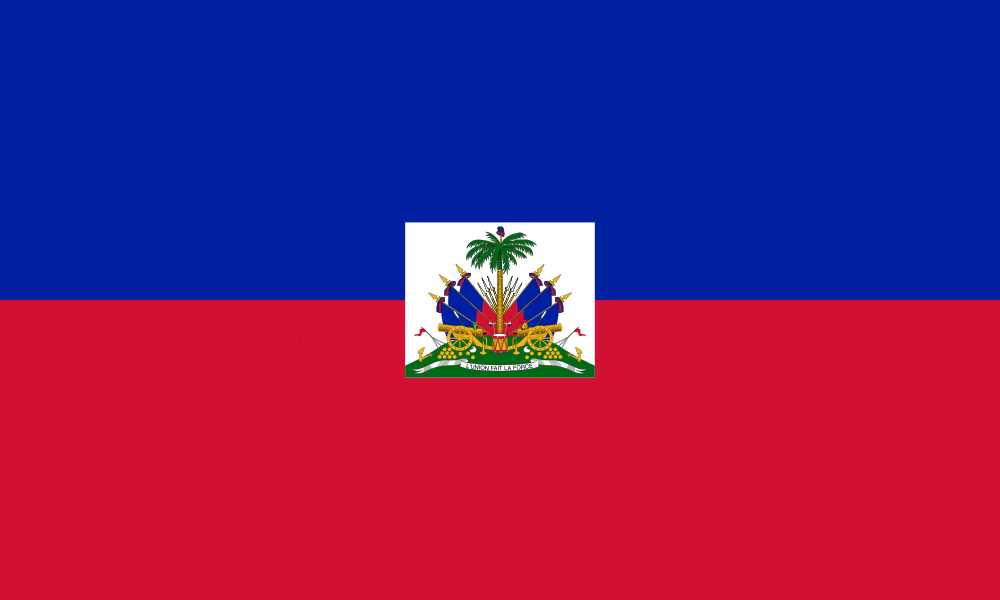
Flag of Haiti
Field Report
Haiti is a mountainous country in the Caribbean Sea, sitting on the western third of an island called Hispaniola about 700 miles southeast of Florida. It is home to more than 11 million people who mostly speak Haitian Creole, a language that grew out of a remarkable and difficult history. Haiti is one of the most densely populated countries in the Americas, full of music, vivid art, and people with deep roots and a story worth knowing.
From the Field Notebook
Hispaniolan Trogon
Haiti's national bird, it wears feathers of red, green, and blue and lives only on the island of Hispaniola, making it found nowhere else on Earth.
American Flamingo
Flocks of these tall pink birds wade through the shallow saltwater lakes of southern Haiti, using their bent beaks to filter tiny shrimp from the water.
Rhinoceros Iguana
This large, armor-plated lizard gets its name from the small horn-like bumps on its snout and can live for more than 60 years on rocky hillsides and dry forests.
Griot
Chunks of pork are marinated in sour orange juice and spices, then fried until crispy on the outside and tender inside — it is one of the most beloved dishes at Haitian celebrations.
Soup Joumou
This rich, golden squash soup with beef and vegetables has been eaten every New Year's Day since Haiti gained independence in 1804, making it a meal full of history and pride.
Akra
Made from grated malanga root mixed with spices and fried into small golden fritters, akra are a popular street snack with a slightly crispy edge and soft center.
Haiti was the first country in the Western Hemisphere founded by people who had escaped slavery, declaring independence from France on January 1, 1804.
Haiti shares the island of Hispaniola with the Dominican Republic, making it one of only two islands in the Caribbean that are split between two different countries.
Haitian Creole, the language spoken by nearly every Haitian, developed from a blend of French, West African languages, and a few words from the indigenous Taíno people who lived there first.
The Iron Market in Port-au-Prince is a famous red metal building that was originally designed for a train station in Egypt before being shipped to Haiti by mistake in the 1800s.
Haiti has a vibrant tradition of colorful painted art that is collected in museums around the world, and many Haitian artists use bright scenes of village life and Bible stories as their subjects.
Daily Life
65
Years life expectancy
68%
Can read and write
100%
Kids go to school
Missions Field Report
Haiti is home to 5 distinct people groups — 1 of them haven’t yet heard about Jesus.
Most Haiti's people follow Christianity (94.5%). Evangelical Christians make up about 17.7% of the population.
What People Believe
Unreached People Groups
These are communities of people who haven’t had the chance to hear about Jesus yet. They need missionaries — and they need kids like you to pray for them.
Deaf
40,000 people
Prayer Journal
Tick each one as you pray. God hears every word.