
Jamaican Boa
This large, non-venomous snake — sometimes called the yellow snake — can grow over six feet long and is found nowhere else on Earth.
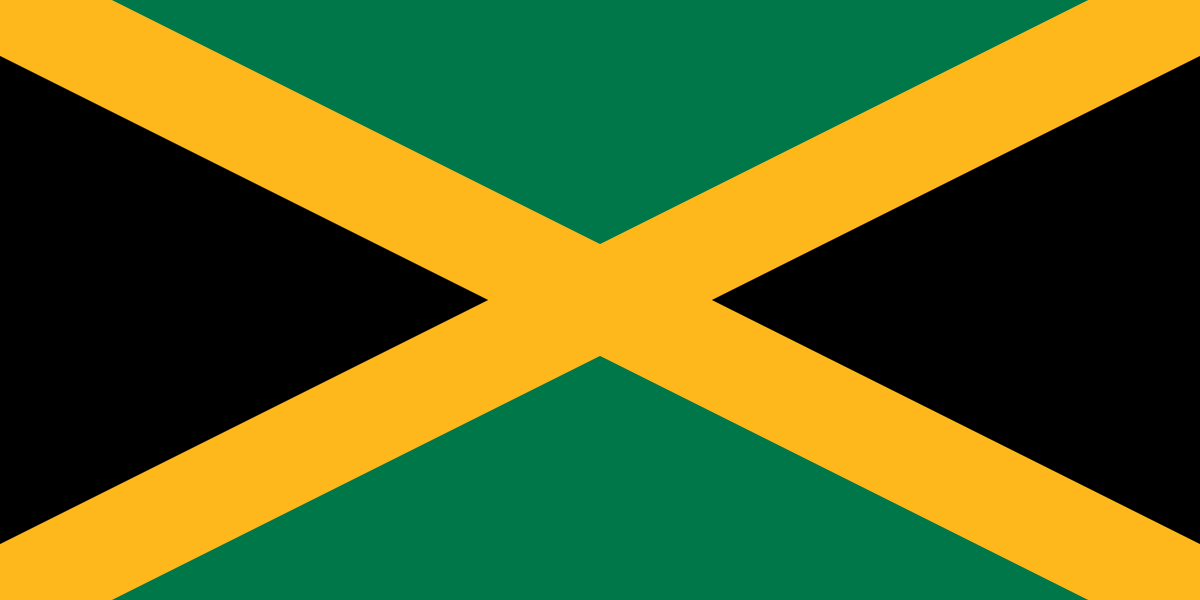
Flag of Jamaica
Field Report
Jamaica is a small island nation in the Caribbean Sea, sitting about 90 miles south of Cuba and roughly 1,000 miles southeast of Florida. It is home to nearly three million people who live among green mountains, coastal plains, and coral-ringed shores. Most Jamaicans speak English as well as a unique creole language called Patois, which blends English with African and Spanish influences brought by the island's long and layered history.
From the Field Notebook
Jamaican Boa
This large, non-venomous snake — sometimes called the yellow snake — can grow over six feet long and is found nowhere else on Earth.
Streamertail Hummingbird
The national bird of Jamaica, known locally as the doctor bird, has two long tail feathers that stream behind it like ribbons as it hovers over flowers.
American Crocodile
These crocodiles live in the brackish coastal wetlands of southern Jamaica and can hold their breath underwater for over an hour.
Ackee and Saltfish
Jamaica's national dish pairs boiled ackee fruit — which looks and tastes a bit like scrambled eggs — with salted, flaked codfish and spices.
Jerk Chicken
Chicken rubbed in a fiery blend of scotch bonnet peppers, allspice, and other spices, then slow-cooked over wood or charcoal until smoky and tender.
Festival
A lightly sweet, golden fried dumpling made from cornmeal and flour that Jamaicans often eat alongside jerk meat or fish.
Jamaica's first railway opened in 1845, making it the very first railway built outside of Europe or North America.
The island is only about the size of the state of Connecticut, yet it has produced more world-record sprinters per capita than almost any other nation on Earth.
Jamaica's Blue Mountains are home to one of the most expensive coffees in the world, grown in soil so rich that the beans are exported to Japan, Europe, and beyond.
The word 'hurricane' comes from 'Huracán,' a storm god in the beliefs of the Taíno people who lived in Jamaica before European contact in the 1490s.
Jamaica sits on a shifting boundary between two tectonic plates, which means the island experiences hundreds of small earthquakes every year, most too faint to feel.
Daily Life
71
Years life expectancy
80%
Can read and write
81%
Kids go to school
Missions Field Report
Jamaica is home to 9 distinct people groups — 1 of them haven’t yet heard about Jesus.
Most Jamaica's people follow Christianity (81.1%). Evangelical Christians make up about 29.8% of the population.
What People Believe
Unreached People Groups
These are communities of people who haven’t had the chance to hear about Jesus yet. They need missionaries — and they need kids like you to pray for them.
Deaf
7,500 people
Prayer Journal
Tick each one as you pray. God hears every word.