
Western Chimpanzee
Sierra Leone is one of the last strongholds for western chimpanzees, who use sticks as tools to dig termites out of mounds — a behavior passed down through generations like a family tradition.
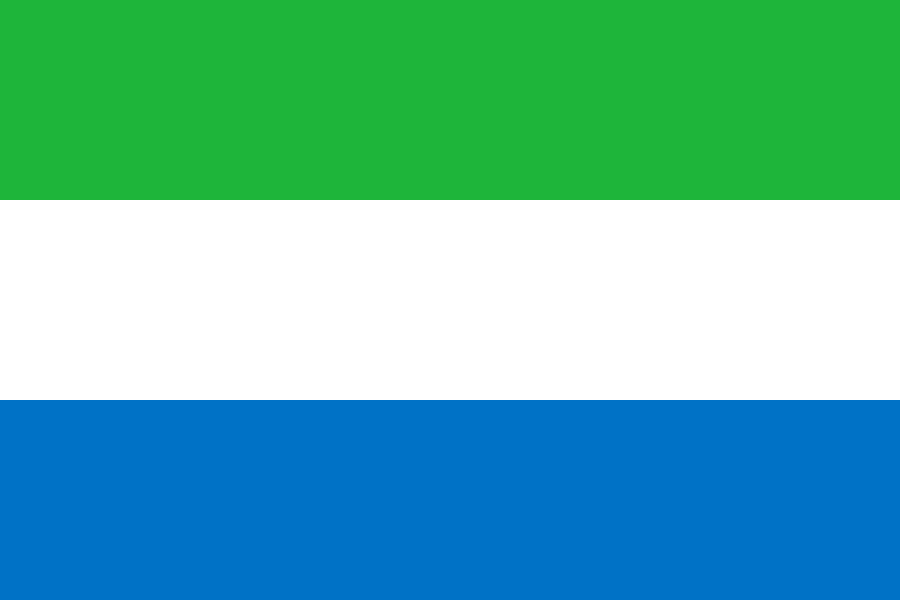
Flag of Sierra Leone
Field Report
Sierra Leone is a small country on the western coast of Africa, tucked between Guinea to the north and Liberia to the south, with the wide Atlantic Ocean washing against its shores. It is a place of dense forests, winding rivers, and bustling markets, home to about eight million people who speak dozens of different languages. Many people there have not yet heard the good news about Jesus, which makes Sierra Leone an important place for Christians around the world to pray for and care about.
From the Field Notebook
Western Chimpanzee
Sierra Leone is one of the last strongholds for western chimpanzees, who use sticks as tools to dig termites out of mounds — a behavior passed down through generations like a family tradition.
Pygmy Hippopotamus
Much smaller and more secretive than its famous cousin, the pygmy hippo lives hidden in the forests and rivers of West Africa and is rarely seen even by the people who live nearby.
African Fish Eagle
This striking bird hunts by swooping low over rivers and snatching fish with its talons, and its loud, crying call is one of the most recognized sounds along Sierra Leone's waterways.
Cassava Leaves
Ground cassava leaves are cooked into a thick, dark green stew with palm oil and meat or fish, and this dish is so central to Sierra Leonean life that many families eat it several times a week.
Jollof Rice
Sierra Leone's version of this beloved West African dish is cooked in a rich tomato and pepper sauce until the rice soaks up every bit of flavor, making it a centerpiece of celebrations and everyday meals alike.
Groundnut Soup
Made from roasted peanuts blended into a smooth, savory broth with vegetables and meat, this soup is warming and filling and is often served over rice or fufu.
Sierra Leone's capital city, Freetown, was founded in 1792 as a home for freed slaves — its very name tells you what its founders hoped it would be.
Sierra Leone is one of the world's top producers of diamonds, and some of the largest and most famous diamonds in history were pulled from its soil.
The country's name comes from Portuguese explorers who called it 'Serra Leoa,' meaning 'Lion Mountains,' likely because thunderstorms roaring over the hills sounded like lions to them.
Sierra Leone has one of the highest twinning rates in the world, meaning twins are born there more often than almost anywhere else on earth.
The Bunce Island fort, sitting in the middle of a river near Freetown, was once a major holding site where enslaved Africans were shipped to the Americas — many of them ancestors of people living in South Carolina and Georgia today.
Daily Life
62
Years life expectancy
44%
Can read and write
98%
Kids go to school
Missions Field Report
Sierra Leone is home to 27 distinct people groups — 12 of them haven’t yet heard about Jesus.
A majority of Sierra Leone's people follow Islam (61.0%). Evangelical Christians make up about 4.9% of the population.
What People Believe
Unreached People Groups
These are communities of people who haven’t had the chance to hear about Jesus yet. They need missionaries — and they need kids like you to pray for them.
Kuranko
465,000 people
Fulbe Futa
313,000 people
Loko, Landogo
232,000 people
Susu
206,000 people
Maninka, Eastern
181,000 people
Prayer Journal
Tick each one as you pray. God hears every word.