
São Tomé Dwarf Olive Ibis
This rare, nocturnal bird is found nowhere else on Earth except the forests of São Tomé, making it one of the most unique birds in all of Africa.
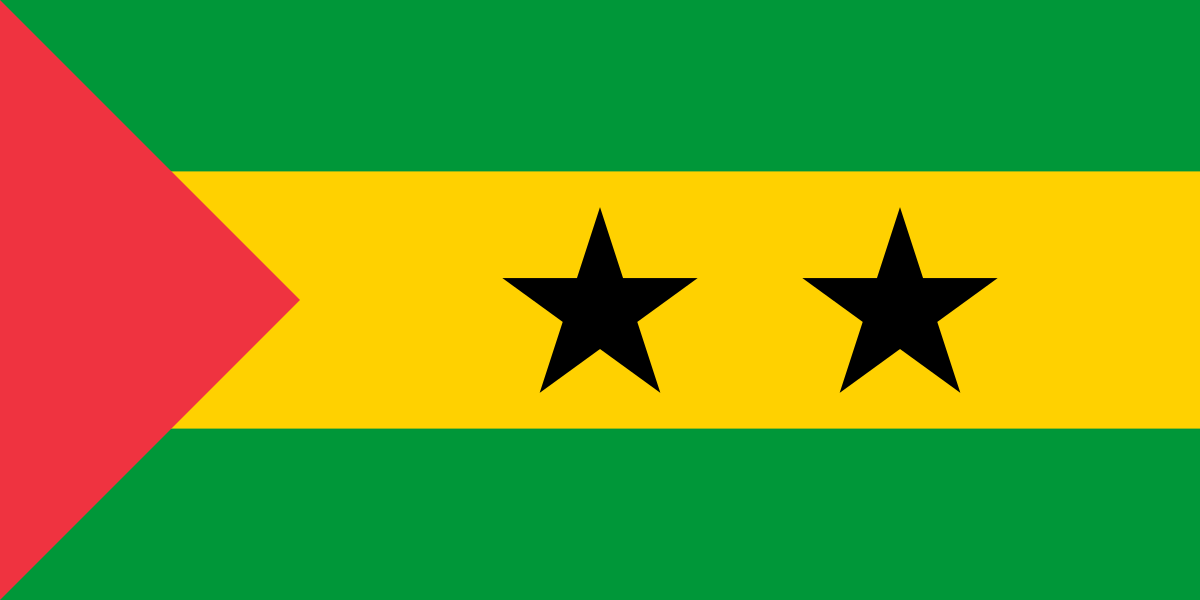
Flag of São Tomé and Príncipe
Field Report
São Tomé and Príncipe is a small island nation tucked in the Atlantic Ocean just off the western coast of central Africa, so close to the equator that it stays warm and tropical all year long. The country is made up of two main volcanic islands covered in lush green mountains, and it is one of the smallest and least-known nations in the world. About 220,000 people call these islands home, speaking Portuguese and a set of unique local creole languages that developed right there on the islands over hundreds of years.
From the Field Notebook
São Tomé Dwarf Olive Ibis
This rare, nocturnal bird is found nowhere else on Earth except the forests of São Tomé, making it one of the most unique birds in all of Africa.
São Tomé Giant Sunbird
The largest sunbird in the world lives only on São Tomé, where it uses its long curved beak to drink nectar from tropical flowers.
São Tomé Green Turtle
Green turtles have been crawling onto the beaches of São Tomé and Príncipe for thousands of years to nest, making the islands one of the most important sea turtle nesting sites in the Atlantic Ocean.
Calulu
This hearty stew made with dried fish, palm oil, okra, and leafy greens is considered the national dish and has a rich, savory depth that reflects the islands' West African roots.
Chocolate from São Tomé
Cacao has been grown on these islands since the 1800s, and the dark chocolate made here is considered some of the finest in the world because of the volcanic soil and tropical climate.
Banana Madura Frita
Ripe bananas fried until golden and slightly caramelized are a beloved everyday side dish that pairs with almost any meal on the islands.
São Tomé and Príncipe is the second smallest country in Africa, made up of two main volcanic islands sitting right in the Gulf of Guinea, very close to the equator.
The equator — the imaginary line running around the middle of the Earth — passes so close to São Tomé that a small islet called Ilhéu das Rolas sits exactly on it, and visitors can stand with one foot in the Northern Hemisphere and one foot in the Southern Hemisphere.
These islands were completely uninhabited when Portuguese explorers arrived around 1470, which means every person living there today is descended from people who came — or were brought — from somewhere else.
São Tomé and Príncipe was once the world's largest producer of sugar, and later became a major source of cocoa, meaning these two tiny islands shaped global trade for centuries.
The islands have been isolated in the ocean for so long that hundreds of species of plants, birds, and insects evolved there and exist nowhere else on the planet, similar to how the Galápagos Islands work.
Daily Life
70
Years life expectancy
87%
Can read and write
93%
Kids go to school
Missions Field Report
São Tomé and Príncipe is home to 6 distinct people groups — 1 of them haven’t yet heard about Jesus.
Most São Tomé and Príncipe's people follow Christianity (86.2%). Evangelical Christians make up about 5.9% of the population.
What People Believe
Unreached People Groups
These are communities of people who haven’t had the chance to hear about Jesus yet. They need missionaries — and they need kids like you to pray for them.
Deaf
1,000 people
Prayer Journal
Tick each one as you pray. God hears every word.