
Syrian Brown Bear
Once roaming the mountain forests of northern Syria, this sturdy bear is one of the largest land mammals native to the region and a reminder of the wild landscape that existed before centuries of settlement.
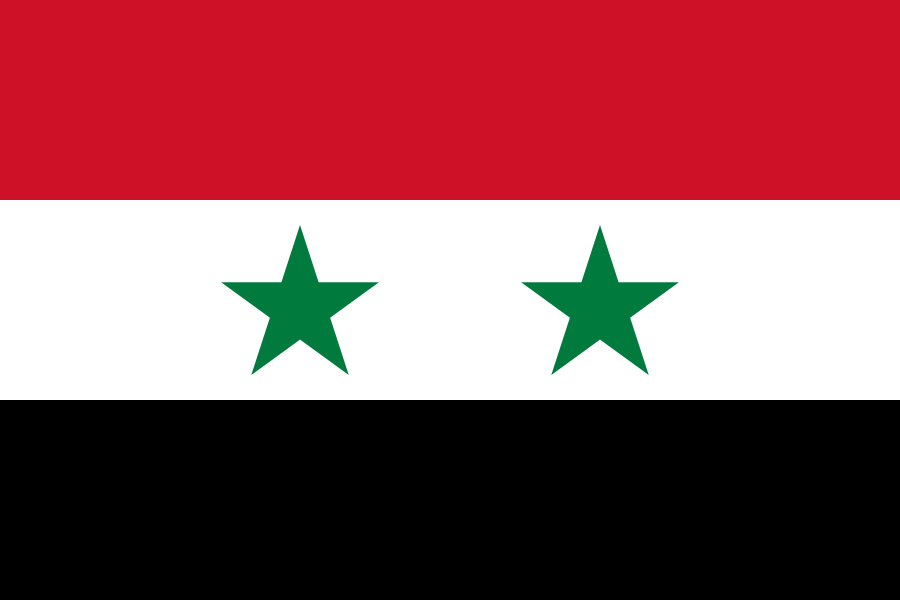
Flag of Syria
Field Report
Syria is a country in the Middle East, tucked between Turkey to the north, Iraq to the east, and the Mediterranean Sea to the west — a region sometimes called the cradle of civilization because humans have been farming, building cities, and writing there longer than almost anywhere else on earth. The Bible mentions Syrian cities like Damascus by name, and some of the earliest Christians in history lived in this very land. Today Syria is a place that has known great beauty and great hardship, and the people there — many of them children just like you — need prayer.
From the Field Notebook
Syrian Brown Bear
Once roaming the mountain forests of northern Syria, this sturdy bear is one of the largest land mammals native to the region and a reminder of the wild landscape that existed before centuries of settlement.
Arabian Oryx
This elegant white antelope with long straight horns was historically hunted across the Syrian desert and became a symbol of how fragile wild herds can be when left unprotected.
Bald Ibis
This rare, long-beaked bird with a featherless red face nested for centuries along Syrian cliffs and rivers, and researchers consider Syria one of the last places in the Middle East where wild flocks were ever recorded.
Kibbeh
Made from ground lamb mixed with bulgur wheat and spices, then shaped into small ovals and fried or baked, kibbeh is a dish so central to Syrian family meals that many grandmothers have their own closely guarded recipe.
Fattoush
This bright salad tosses together tomatoes, cucumbers, fresh herbs, and crunchy toasted flatbread pieces with a tangy pomegranate-lemon dressing that wakes up every flavor on the plate.
Baklava
Layered sheets of paper-thin pastry are filled with pistachios or walnuts, baked golden, and soaked in sweet rose-scented syrup, making this a treat found at celebrations and in shop windows across Syrian cities.
Damascus, the capital of Syria, is widely considered one of the oldest continuously inhabited cities on earth, meaning people have been living there for at least 11,000 years.
The Apostle Paul, after his dramatic encounter with Jesus on the road to Damascus, spent time in that very city — making Syria one of the earliest places in the world where the Christian faith took root.
Syria is home to Krak des Chevaliers, a massive medieval stone castle built by Crusaders in the 1100s that historians call one of the best-preserved castles in the entire world.
The Euphrates River, one of the most famous rivers in the Bible, flows through northeastern Syria before continuing into Iraq — the same river mentioned from Genesis to Revelation.
Arabic, the main language of Syria, is written from right to left, and its alphabet has 28 letters — all consonants, with vowel sounds usually left for the reader to figure out from context.
Daily Life
72
Years life expectancy
94%
Can read and write
68%
Kids go to school
Missions Field Report
Syria is home to 31 distinct people groups — 20 of them haven’t yet heard about Jesus.
Most Syria's people follow Islam (92.3%). Less than 1% of people in Syria are Evangelical Christians.
What People Believe
Unreached People Groups
These are communities of people who haven’t had the chance to hear about Jesus yet. They need missionaries — and they need kids like you to pray for them.
Turkmen, Middle-Eastern
2,001,000 people
Alawite
1,846,000 people
Kurd, Kurmanji
1,746,000 people
Arab, Saudi - Najdi
1,555,000 people
Druze
799,000 people
Prayer Journal
Tick each one as you pray. God hears every word.