
African Elephant
Zambia is home to some of Africa's largest elephant herds, and the Luangwa Valley is one of the best places on Earth to watch them wade through rivers at sunset.
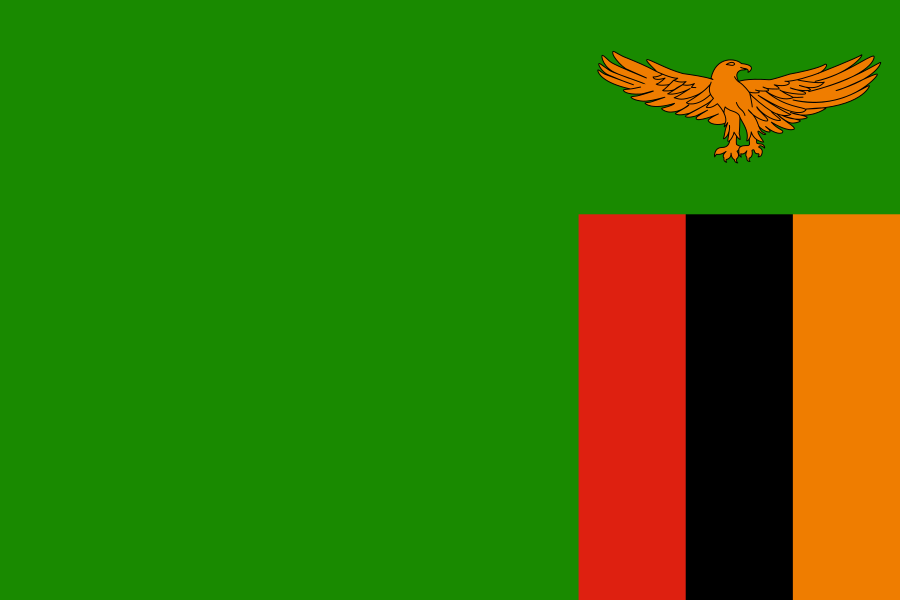
Flag of Zambia
Field Report
Zambia is a landlocked country sitting in the heart of southern Africa, about the size of Texas and Oklahoma put together, filled with wide rivers, open grasslands, and one of the most powerful waterfalls on Earth. More than 19 million people live there, speaking dozens of different languages and belonging to many different ethnic groups with rich traditions. Many Zambians call themselves Christians, but in some regions people have never heard the true gospel of Jesus, which is why missionaries and local believers are working hard to share it.
From the Field Notebook
African Elephant
Zambia is home to some of Africa's largest elephant herds, and the Luangwa Valley is one of the best places on Earth to watch them wade through rivers at sunset.
African Fish Eagle
This striking bird, whose haunting call echoes across Zambia's rivers and lakes, is so beloved that it serves as the national symbol on Zambia's coat of arms.
Thornicroft's Giraffe
Found only in Zambia's South Luangwa National Park, this rare subspecies of giraffe exists nowhere else in the wild on the planet.
Nshima
Zambia's most important everyday food, nshima is a thick, smooth porridge made from ground maize that is shaped by hand and eaten with stews, relishes, or vegetables at nearly every meal.
Kapenta
These tiny dried fish, harvested from Lake Kariba and Lake Tanganyika, are fried or stewed and carry a salty, savory punch that gives plain nshima a lot of flavor.
Ifisashi
A traditional dish of leafy greens simmered slowly in ground peanuts, ifisashi has a rich, nutty taste and shows how Zambian cooks turn simple ingredients into something deeply satisfying.
Victoria Falls, on Zambia's border with Zimbabwe, is the largest waterfall in the world by total area of falling water, and the local Tonga people called it Mosi-oa-Tunya, meaning 'the smoke that thunders.'
Zambia is one of the most landlocked countries on Earth, surrounded by eight different nations and sitting roughly in the center of the African continent with no coastline at all.
Zambia gained independence from Britain on October 24, 1964, and chose a copper-colored rectangle on its flag to honor the copper mining industry that built much of the country's early economy.
The Zambezi River, which gives Zambia its name, stretches more than 2,700 kilometers and is the fourth longest river in Africa, flowing through six countries before reaching the Indian Ocean.
Zambia has more than 70 different ethnic groups who speak over 70 distinct languages, which means a child traveling across the country might hear a completely different language in nearly every region.
Daily Life
66
Years life expectancy
82%
Can read and write
83%
Kids go to school
Missions Field Report
Zambia is home to 75 distinct people groups — 4 of them haven’t yet heard about Jesus.
Most Zambia's people follow Christianity (86.3%). Evangelical Christians make up about 25.1% of the population.
What People Believe
Unreached People Groups
These are communities of people who haven’t had the chance to hear about Jesus yet. They need missionaries — and they need kids like you to pray for them.
Swahili
55,000 people
Gujarati
52,000 people
Deaf
14,000 people
Yao
6,000 people
Prayer Journal
Tick each one as you pray. God hears every word.